Behavior-Driven Leadership Training with Reinforcement Drivers
A competency-based, cohort learning experience designed to translate leadership principles into measurable, repeatable management behaviors supported by structured reinforcement systems.

Overview
This competency-based, cohort learning experience was designed to translate leadership principles into measurable, repeatable management behaviors supported by structured reinforcement systems.
Developed in response to inconsistent managerial performance, this solution reframed leadership challenges as behavior and systems alignment issues affecting workflow stability, employee engagement, and customer experience.
Rather than treating training as a one-time event, the program focused on sustainable behavior change. Through simulation-based practice, observable performance criteria, and embedded workflow drivers, managers practiced essential leadership skills and integrated them into daily operations.
Deliverables included:
- Reinforcement driver package
- 15-minute executive business case presentation
- Competency-driven five-week cohort program design
- Performance-based evaluation strategy
Executive Business Case Presentation
This 15-minute executive presentation communicates the strategic rationale, competency framework, reinforcement architecture, evaluation model, and projected organizational impact. It demonstrates my ability to translate performance analysis into an executive-level narrative aligned to business priorities.
Purpose and Intended Audience
This proposal was developed for executive leadership and HR stakeholders responsible for strengthening leadership consistency within a digital commerce organization.
Employee surveys and focus group data revealed:
- Inconsistent communication rhythms
- Reactive decision-making
- Limited coaching confidence
- Workflow instability
The initiative aimed to align frontline leadership behaviors with measurable organizational performance outcomes.
Process
This project followed a performance-centered backward design approach grounded in a behavior-change strategy.
1. Performance-Based Needs Analysis
Survey data, focus group insights, and manager feedback were analyzed to identify observable leadership inconsistencies and root causes.
2. Competency Identification
Four leadership competencies were extracted and framed as measurable, repeatable skills.
3. Critical Behavior Mapping
Each competency was translated into observable workplace behaviors:
- Weekly team meetings with written summaries
- Biannual performance-development meetings
- Monthly performance reporting with team review
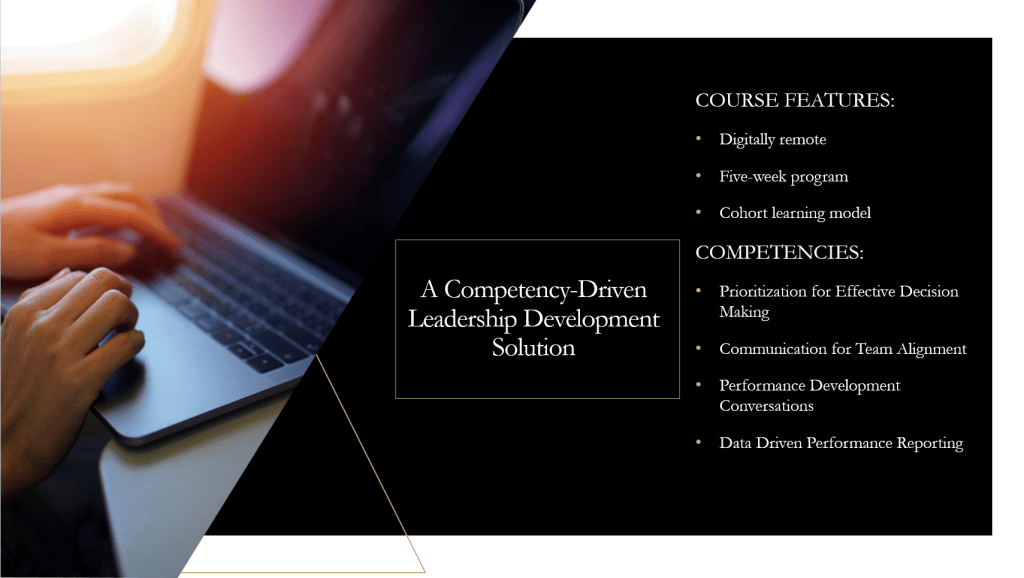

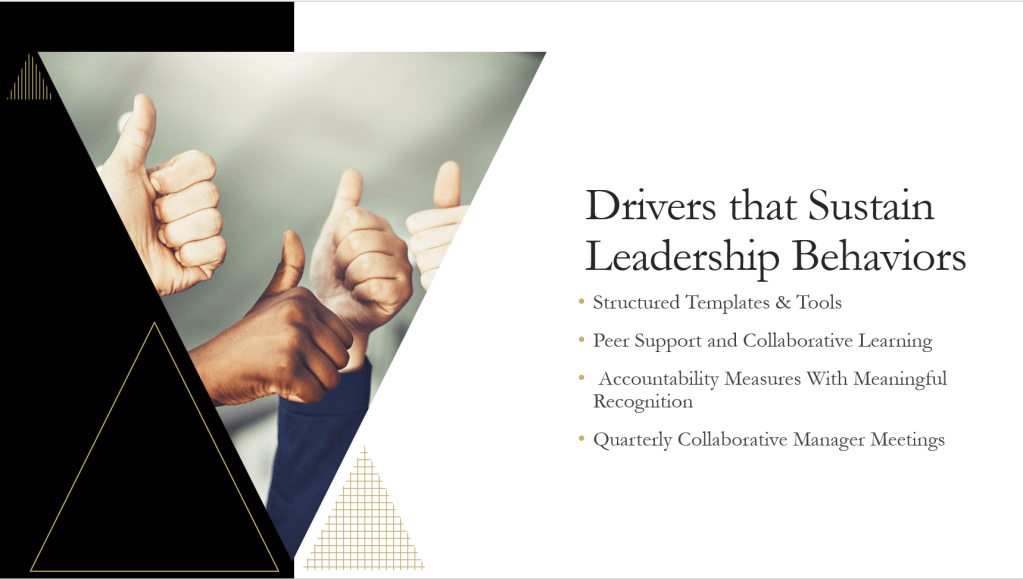

This framework shows how leadership principles were translated into observable, repeatable workplace behaviors that pass the “video test.” It anchors the entire intervention in measurable performance.
The accompanying Critical Behavior and Driver package outlines the structured reinforcement system design to prevent behavior decay after training. It demonstrates how environmental drivers, peer accountability, monitoring systems, and recognition pathways were embedded into the workflow.
4. Driver Package Architecture
To prevent behavior decay post-training, a structured reinforcement system was developed, including:
- Standardized templates
- Peer accountability structures
- Quarterly collaborative meetings
- Leadership recognition pathways
5. Performance-Based Evaluation
Managers engaged in simulation-based assessments aligned with real workplace demands.
They:
- Facilitated 30-minute simulated alignment meetings
- Demonstrated observable communication behaviors
- Submitted written summaries, translating the discussion into documentation
Evaluation was tied to leading organizational indicators, including workflow stability and engagement pulse data.
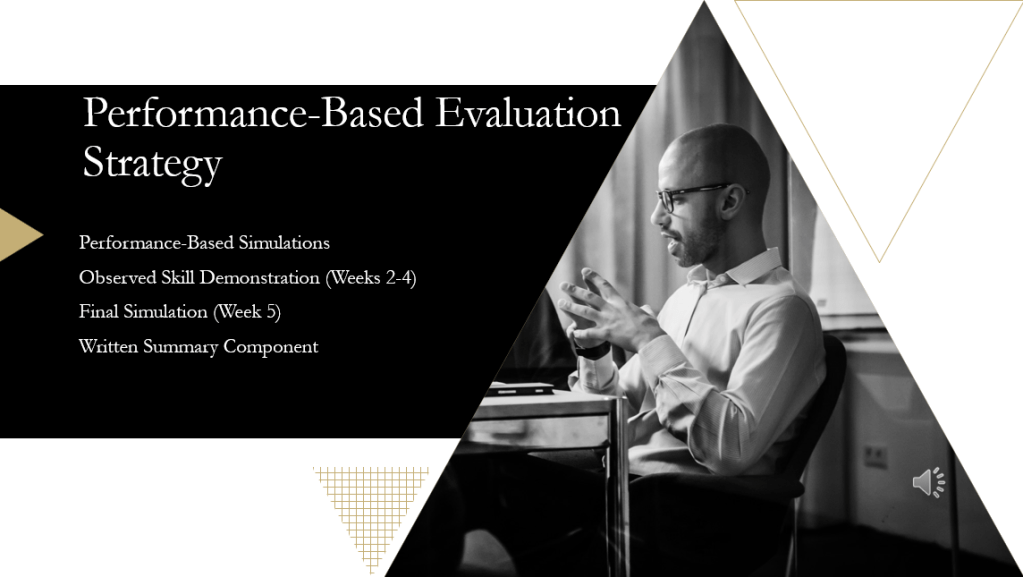
This artifact demonstrates how simulation-based assessments were intentionally selected over traditional knowledge quizzes to measure applied leadership performance.
In the assessment analysis, I justify this approach by drawing on Reeves’ emphasis on authentic workplace tasks and Shank’s principle that assessments must directly measure what learners are expected to do on the job.
This artifact demonstrates my ability to:
- Align assessment type with learning objectives
- Defend assessment decisions using research
- Design observable criteria tied to Kirkpatrick’s Levels of Evaluation
- Connect learning evaluation to business performance indicators
Role
For this project, I served as:
Instructional Designer
Learning Strategy Consultant
Program Architect
Executive Presenter
I conducted the performance gap analysis, designed the competency framework, built the behavior-to-business alignment model, developed the reinforcement system, created simulation-based assessments, authored the executive presentation, and developed the implementation timeline and evaluation strategy.
Tools Used
Microsoft PowerPoint
Strategic performance mapping frameworks
Simulation-based assessment design
Cohort-based learning architecture
Behavior driver system mapping
Survey and engagement data analysis
Outcome
This proposal outlines:
- A scalable five-week pilot model
- A six-week development timeline
- Clear leading indicators aligned to retention, efficiency, and engagement
- Measurable alignment between leadership behavior and business performance
The program demonstrates how leadership development can move beyond soft skills into structured, observable, and sustainable organizational impact.
Consultation
Ready to elevate your training strategy?
Let’s design something intentional together.
 Engage & Empower Learning Design